

2026 Sabin Awards Ceremony

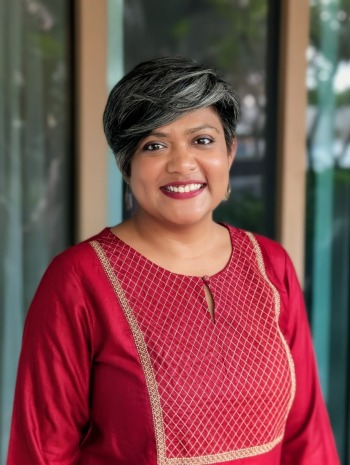 Senjuti Saha, PhD, MPH
Dr. Senjuti Saha has already left a permanent mark on public health, moving scientific discovery out of the lab and into the lives of millions. Her research has directly shaped Bangladesh’s vaccine policies, expanded the use of genomics for outbreak response, and redefined how low-and middle-income countries generate and own scientific knowledge.
Under her leadership as Deputy Executive Director of the Child Health Research Foundation in Bangladesh, surveillance programs have continued to generate critical evidence for the impact of vaccines such as pneumococcal conjugate vaccine and Hib vaccine. Her landmark studies on typhoid epidemiology and antimicrobial resistance formed the scientific foundation for Bangladesh’s launch of the typhoid conjugate vaccine campaign in October 2025, where over 40 million children under the age of 15 have been vaccinated so far. She also successfully uses her reach to promote vaccine uptake through social media and community campaigns.
Raised in Dhaka, Bangladesh, Saha attended the University of Toronto, Canada and went on to earn a PhD there in Molecular Genetics. She completed postdoctoral training at the Hospital for Sick Children in Canada and at Stanford University in the U.S. but returned home to work on the frontlines of public health and establish a state-of-the-art genomics center.
With more than 90 peer-reviewed publications, Saha’s groundbreaking work has included notable contributions to understanding resistance patterns in typhoid, paratyphoid, and Klebsiella infections. She led the sequencing of Bangladesh’s first SARS-CoV-2 genome.
Dr. Saha is renowned for her compassionate, community-rooted approach to science and mentorship. She has trained dozens of early-career scientists, embedding equity, collaboration, and open science as core values. Her commitment to public engagement is reflected in her country-wide initiative “Building Scientists for Bangladesh” which aims to build the next generation of scientists by fostering equitable access to science and, very importantly, promote trust in science. She is now extending this vision globally, planning science camps in other countries of Asia and Africa, including Rwanda, a country recovering from one of the worst genocides in history — an initiative grounded in her belief that science can heal societies as well as individuals.

We make vaccines more accessible, enable innovation and expand immunization across the globe.