
The Humanitarian Face of Vaccination in Cameroon’s Crisis-Hit Northwest and Southwest

In the Northwest and Southwest regions of Cameroon, where conflict has stripped families of safety, income, and access to basic services, vaccines remain one of the few consistent shields children still have. In these communities, though, vaccination can sometimes feel like a secondary concern as parents grapple with other tough daily questions, such as “Where will we sleep tonight?,” “What will my children eat?,” “Where do we find clean water?,” and “How do I get medication for my sick child?”
Recognizing this issue, health workers sought to improve vaccine uptake while helping families meet those additional needs.
Shifting the Model
Angu Glory, a Cameroon Baptist Convention Health Services (CBCHS) Project District Officer in Batibo, experienced this issue first-hand when a mother told her, “There is no need for the vaccine because hunger will kill my child before any vaccine-preventable disease does.” That comment reflects the harsh reality caregivers in this region face. “Families aren’t rejecting vaccines. They’re frustrated and overwhelmed by the daily struggles to survive,” Glory said.
In light of these dynamics, the CBCHS Immunization Program made a deliberate shift to an intentionally integrated model that addresses both health and humanitarian needs. The goal was to meet people where they were, address what matters to them first, and build trust in vaccination.
This approach generally begins with identifying the most urgent needs in each community and coordinating with other international organizations that lack last-mile access to fulfill that role. CBCHS gathers supplies from partners and the regional Ministry of Public Health teams. Together with local partners such as community-based organizations, it identifies the most vulnerable communities and ensures that those in need receive the necessary support.
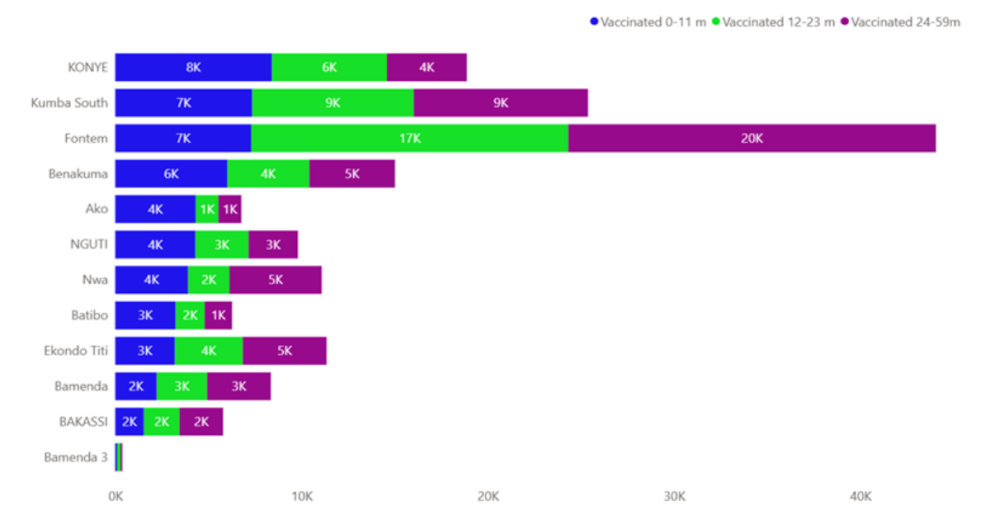
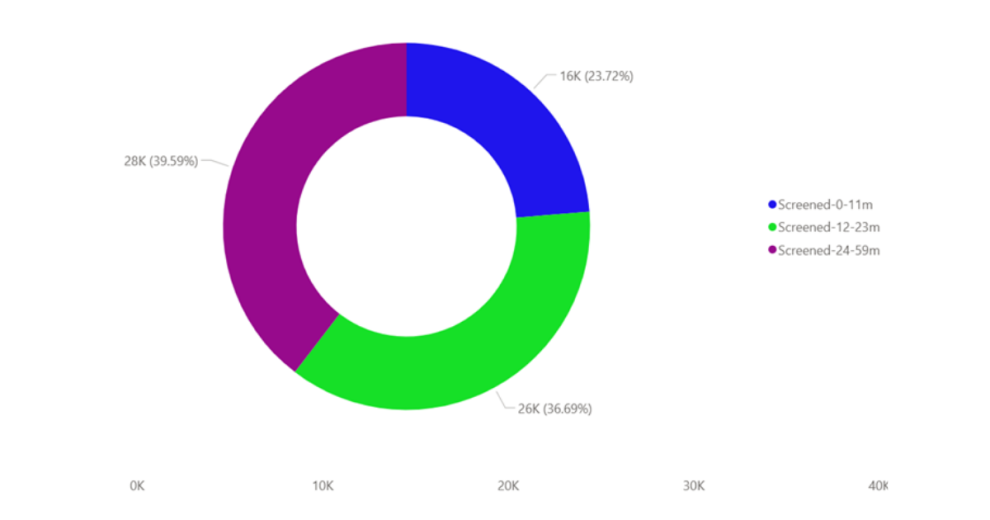
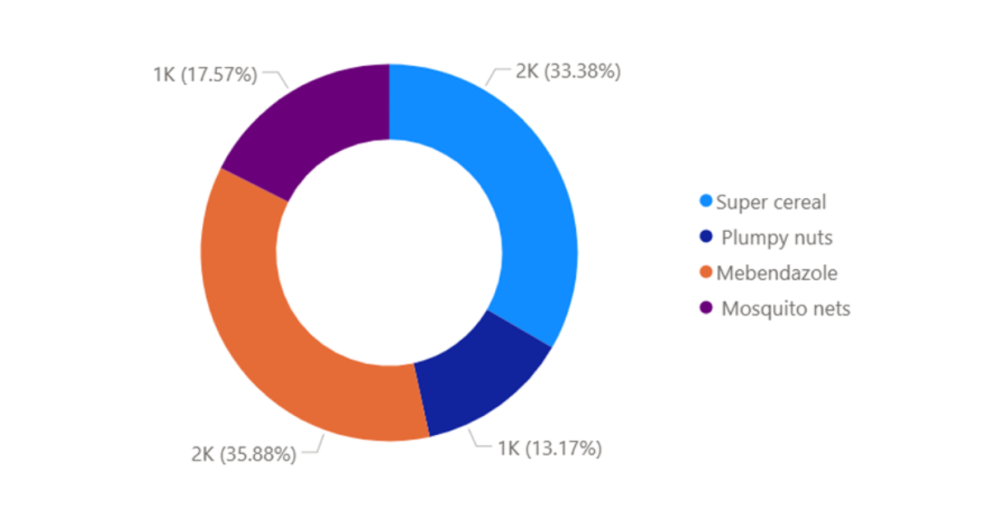
The impact was immediate — more than 163,699 children were vaccinated, and 860,493 different vaccine doses were administered to children across the 11 implementing health districts from March to December 2025. At the same time, CBCHS addressed those other concerns — more than 68,844 children were screened for malnutrition, with 2,038 receiving Super Cereal and 804 receiving Plumpy Nut. In addition, 1,073 received mosquito nets and 2,191 were given mebendazole, a medication used to treat parasites. More than 2,000 children were screened for other diseases, and more than 13,090 caregivers received practical nutrition education and lessons on the benefits of vaccination.
Children Vaccinated Per District
Children Screened
Items Distributed
Vaccination events were highly anticipated by caregivers, who expected to receive more than just vaccines.
“Parents came more for the humanitarian packages and received the vaccination as well,” said Glory. Though this approach isn’t new to Cameroon’s national immunization program, it often fails due to weak transport systems, limited manpower, and the immense challenge of reaching crisis-affected, off-grid communities. CBCHS’ intentionality changed that by meticulously planning each step, budgeting for it, and implementing mechanisms to ensure smooth execution. This approach helped rebuild trust in these communities, especially between health personnel and vaccination efforts. As one caregiver explained simply, “It makes me feel like someone truly cares about our real problems.”
Challenges that Remain
Although this strategy has proven effective, it faces considerable obstacles. Dr. Njume Epie, the Technical Coordinator of the CBCHS Immunization Program, emphasized the issues.
“The needs are extensive. It’s definitely the right approach, but it requires additional costs and manpower to meet our objectives. Additionally, securing extra humanitarian supplies from other partners is often difficult, so simple vaccination teams continue their work despite ongoing community needs. If resources were available, we could provide more support,” he stated. “We appreciate what we currently have and hope more partners will join us to increase our impact,”
Despite facing funding shortages and limited partnerships, CBCHS continues to use its established access routes to deliver life-saving vaccines and vital humanitarian aid. These efforts reach regions where systems have collapsed, leaving families to survive independently in unstable areas. CBCHS demonstrates that combining vaccination with humanitarian work not only stimulates demand for vaccines but also offers dual protection to communities that have nearly lost everything.
 Fri Delphine Chifor is an experienced public health strategist and communicator with more than 16 years of improving health outcomes in Cameroon and internationally. She has spent more than five years working closely within immunization landscapes in fragile and conflict-affected communities. She combines strong public health expertise with engaging storytelling, creating evidence-based narratives that influence policy, change social norms, and boost vaccine acceptance in some of the country’s most challenging operational settings.
Recommended for You


We make vaccines more accessible, enable innovation and expand immunization across the globe.