
Breaking the Silence Can Break the Stigma
Reflections from the Global HPV Consortium Storytelling Panel at IPVC2025


Key Takeaways:
- Personal storytelling combined with data boosts HPV vaccine trust and demand
- Survivor narratives reduce stigma and empower open HPV and cervical cancer discussions
- Youth advocates and social media are crucial for reaching new generations
- Empathy from clinicians and media builds community trust and engagement
- Men and boys must be included in HPV and cervical cancer prevention efforts
- Journalists play a vital role in combating misinformation through human-centered stories
- Tools like Sabin’s Immunization Insights Dashboard enhance storytelling with real-time data
Global Collaboration to Advance HPV Awareness
At the recent 2025 International Papillomavirus Society (IPVS) Conference in Bangkok, the Global HPV Consortium spotlighted how personal storytelling, accurate data, and trusted voices are driving HPV vaccine uptake and transforming the global fight to end cervical cancer.
Opening the HPV Awareness Track
The Consortium organized the opening session for the conference’s HPV Awareness Track with a panel entitled “Empowering Voices: Uniting Media, Survivors, and Young Champions to Advance HPV Awareness, Prevention, and Intervention through Storytelling.”
The main takeaway: eliminating HPV-related cancers requires both science and stories rooted in trust, empathy, and collaboration. When survivors, youth leaders, clinicians, and media unite their voices, prevention becomes not just possible, but powerful.
Other key messages from the panel:
- Storytelling and data must coexist. Combining emotional narratives with credible evidence drives trust and demand for prevention.
- Breaking the silence can break the stigma. Survivors and advocates normalize conversations about HPV and cervical cancer, replacing fear with empowerment.
- Inclusive advocacy strengthens impact. Men, boys, and youth must be part of the solution.
- Empathy builds trust. Human connection — between clinicians, journalists, survivors, and communities — is at the heart of effective communication.
- Partnerships amplify change. When media, medicine, and civil society work together, awareness turns into action and accelerates progress.
Survivor Perspectives: Personal Stories with Global Power
Panelists brought lived experiences and professional insights to the session, highlighting empathy, trust, and inclusive communication in advancing prevention.
Virginia Mopas, a cervical cancer survivor and community advocate in the Philippines, shared her journey from diagnosis to recovery and advocacy. She described how early fear gave way to hope once she learned more about treatment and connected with other survivors.
“You don’t have to feel guilty or embarrassed about having cervical cancer. It’s not your fault,” she emphasized. “There is life after cancer.” Virginia now leads online support groups and campaigns to end the stigma around cervical cancer.
Adam Mendelsohn, an 18-year-old entrepreneur from the U.S. who volunteers as an advocate for universal HPV vaccination, shared the powerful story about his father’s survival from HPV-related throat cancer and Adam’s own mission to educate and empower his peers.
“Human connection is key,” he said. “Protecting everyone means educating everyone.” Adam emphasized the need to include boys and men in HPV prevention conversations and to leverage social media and young voices to reach the next generation. (See his Instagram post)
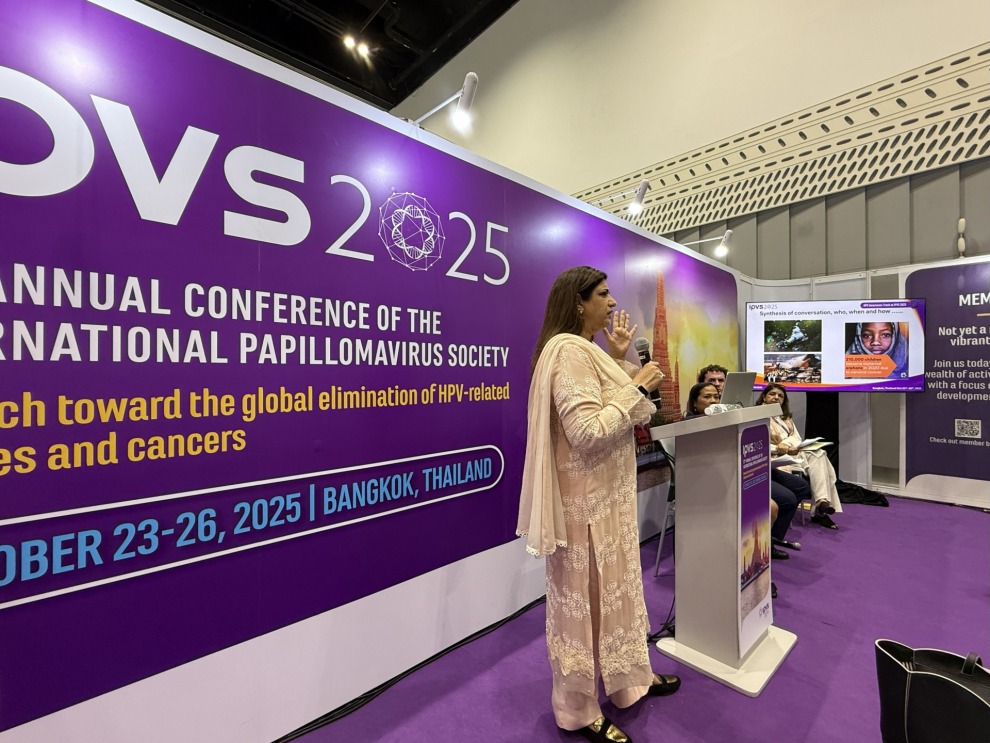
Dr. Noreen Zafar, an OB-GYN based in Pakistan, founder and president of the Girls & Women’s Health Initiative, and a Member Expert of the Global Strategy Against Cervical Cancer for WHO EMRO, reflected on her decades-long career in women’s health, sharing personal experiences from the clinic and lessons from Pakistan’s recent HPV vaccine rollout. She highlighted the need for empathy in medicine and for placing women’s stories at the center of data and policy. “You have to come down from the doctor’s pedestal, sit on an equal footing, and treat the woman in front of you as valuable as yourself,” she said.
Huma Khawar, an independent journalist based in Pakistan and a strategic advisor at MannionDaniels, drew on decades of health reporting to call for responsible, empathetic, and evidence-based storytelling. She underscored the role of journalists as partners in building trust and combating misinformation.
“HPV prevention is a women’s empowerment issue, a gender justice issue, and an economic issue… not just a medical intervention,” she said. “We train media to center people, not just the disease — to personalize it, humanize it, not sensationalize it.” Khawar also emphasized the benefits of starting public dialogue about cervical cancer before vaccine rollouts to build understanding and acceptance.
Diving into Data: The Global Immunization Insights Dashboard
Attendees also saw a preview of the new Global Immunization Insights Dashboard tool from the Sabin Vaccine Institute, designed to pair immunization coverage data with a broader view of the factors impacting vaccination. The tool supports data-informed storytelling, making powerful stories even stronger.
A Shared Sense of Purpose
Audience members joined the conversation, sharing their own perspectives on the power of storytelling and advocacy. Survivor Lillian Kreppel of the HPV Cancers Alliance emphasized everyday, grassroots storytelling — normalizing HPV conversations in daily life. David Winterflood of NOMAN is an Island: Race to End HPV, echoed calls to include men in HPV and cervical cancer conversations — as partners, fathers, and decision-makers — especially in conservative contexts. Other researchers and advocates in the audience echoed the need for local survivor stories to fill awareness gaps and explored how to balance positive and cautionary stories — using both hope and urgency to motivate prevention.
The session closed with a call to action from each panelist and, with that, a shared sense of purpose: that progress depends on trusted voices and when science, empathy and lived experience move together, lasting change is possible. Each story shared during the panel was a reminder that awareness grows one conversation at a time — and together, these voices are working to make HPV prevention and cervical cancer elimination a global reality.
Recommended for you


We make vaccines more accessible, enable innovation and expand immunization across the globe.